

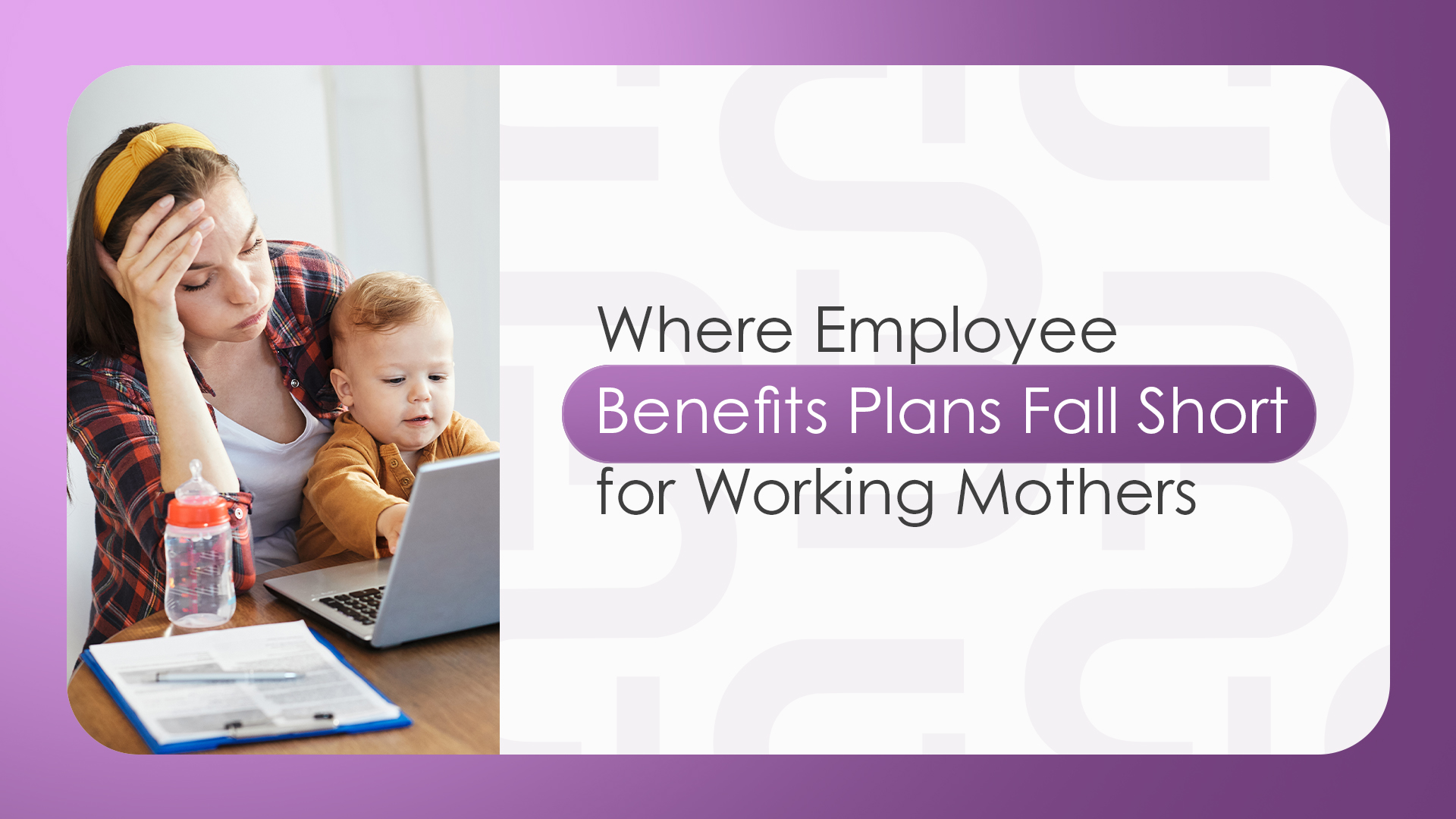
Working mothers represent a significant and growing share of the Canadian workforce. They are also, by most measures, among the most stretched.
The responsibilities do not separate neatly at the office door. Caregiving, mental load, school schedules, elder care, and the invisible labour of holding a household together do not pause during working hours. And when the employee benefits plan that is supposed to support them does not reflect those realities, the cost is borne quietly, personally, and often invisibly to the organization.
Most group benefits plans were designed for a workforce that no longer exists. They were built around a standard of coverage that does not account for the compounded demands working mothers navigate daily. The result is a plan that technically covers them while functionally underserving them.
Key Takeaways
- Working mothers carry a compounded set of responsibilities that most group benefits plans were never designed to address, from caregiving demands to mental health pressures to career continuity concerns
- The gap between what a employee benefits plan offers and what a working mother can actually access and use is often wider than HR leaders realize
- Closing that gap requires a deliberate, life-stage lens on plan design, not just expanded coverage limits

Mental Health Coverage That Runs Out Before It Helps
Mental health benefits is consistently cited as one of the benefits working mothers value most. It is also one of the areas where most employee benefits plans fall shortest.
A plan that offers a $500 or $1,000 annual mental health allowance sounds meaningful until you calculate how far it goes. At current therapy rates in most Canadian cities, that covers four to eight sessions. Meaningful therapeutic progress rarely happens that quickly. Working mothers managing burnout, anxiety, postpartum challenges, or the cumulative stress of dual responsibilities need sustained access to care, not a benefit that disappears before it has done its work.
The gap is not just in coverage limits. It is in the assumption that access equals support. A working mother who cannot get an appointment for six weeks, who cannot find a therapist with evening availability, or who does not know her plan covers virtual care is not being supported by her benefits plan. She is technically enrolled in one.
Caregiving Support That Barely Scratches the Surface
The caregiving crisis can affect working mothers disproportionately. Many are managing childcare responsibilities alongside care for aging parents, a reality sometimes described as the sandwich generation, though the weight of it rarely fits neatly into any label.
Yet caregiving support within most group benefits plans remains underdeveloped. Emergency childcare, elder care referral services, and dependent care spending accounts are offered inconsistently and communicated poorly when they do exist.
Working mothers navigating a caregiving emergency do not have time to excavate their benefits documentation. When the support is hard to find, it effectively does not exist.
Parental Leave Top-Up: The Gap Between What Employers Offer and What Employees Need
Parental leave top-up is one of the most significant benefits differentiators for working mothers evaluating employers. It is also one of the most variable.
Some organizations offer generous top-up programs that bridge the gap between employment insurance and regular salary. Many offer partial top-up. Others offer none at all.
For working mothers, the financial reality of parental leave shapes decisions about when to return to work, whether to return full-time, and in some cases whether to return at all. A benefits plan that does not include meaningful parental leave top-up is not a neutral position. It is a signal about how much the organization values the working mothers within it.
Flexibility That Lives on Paper but Not in Practice
Flexible work arrangements are often listed as a benefit. Whether they function as one depends entirely on the culture and management practices that surround them.
A working mother who technically has access to flexible scheduling but works for a manager who views it as a sign of reduced commitment is not benefiting from that policy. The benefit exists. The access does not.
This is one of the more difficult gaps for HR leaders to address because it sits at the intersection of policy and culture. But it is worth naming directly: flexibility that is not psychologically safe to use is not a benefit. It is a liability dressed up as one.
What HR Leaders Should Be Asking
For HR leaders reviewing their current employee benefits plan, these questions are worth sitting with:
- Does our mental health coverage provide enough sessions for meaningful progress, or does it run out before care has a chance to work?
- Are our caregiving support options clearly communicated and easy to access, or do employees have to search for them in moments of crisis?
- Does our parental leave top-up reflect the financial realities working mothers face, or does it create a gap that pushes return-to-work decisions earlier than employees would choose?
- Is flexibility genuinely accessible within our culture, or does taking it up carry a professional cost?
None of these questions have comfortable answers for most organizations. That discomfort is worth staying with, because it is where the real plan design work begins.
How Benchmark Benefits Can Help

At Benchmark Benefits, we work with organizations across Canada to design employee benefits plans that reflect the actual lives of the people they cover.
That means looking beyond standard plan structures and asking harder questions about who your workforce is, what they need, and whether your current plan is built to deliver it. For organizations with significant populations of working mothers, that analysis often surfaces gaps that are both meaningful and addressable.
If your benefits plan is due for a closer look, our team is ready to help you start that conversation.