
Author name: Benchmark

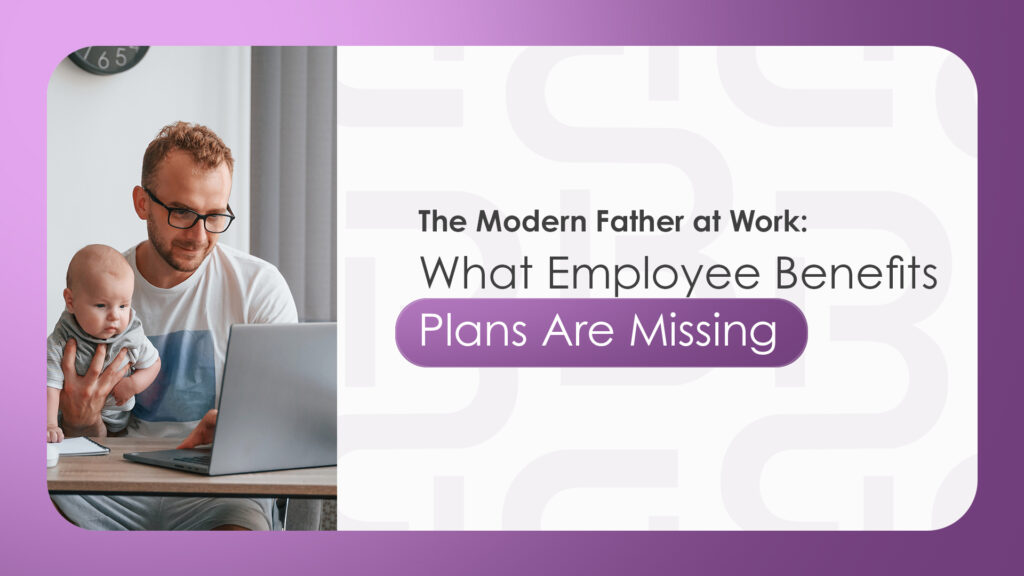
The Modern Father at Work: What Employee Benefits Plans Are Missing

Key Takeaways  The assumption that fathers primarily need financial benefits is outdated. Today’s working fathers are caregivers, mental health consumers, and in a growing number of cases, the sole parent in the household  Paternity leave eligibility and paternity leave uptake are two different things. Culture, inadequate top-up, and poor communication mean most eligible fathers do not take the …

The Modern Father at Work: What Employee Benefits Plans Are Missing Read More »

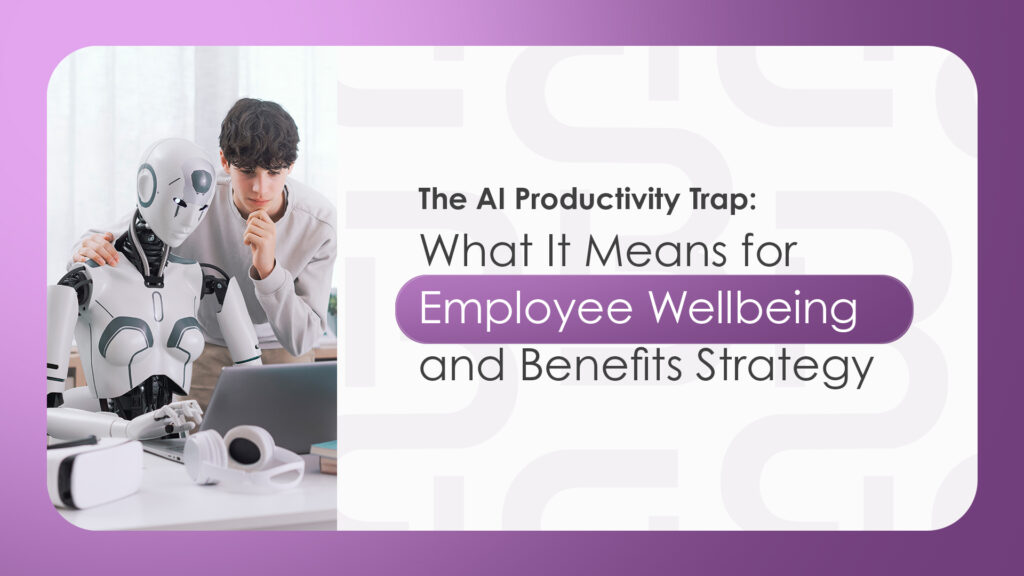
The AI Productivity Trap: What It Means for Employee Wellbeing and Benefits Strategy

Key Takeaways    AI collaboration boosts short-term performance but research shows it reduces intrinsic motivation and increases boredom when employees return to unassisted work, a pattern that carries long-term wellbeing implications  Disengagement and boredom driven by technology-dependent workflows are early warning signs of burnout, making this a benefits and workforce health issue, not just a technology management one  HR …

The AI Productivity Trap: What It Means for Employee Wellbeing and Benefits Strategy Read More »

Your Employee Benefits Plan Has a Mental Health Problem. Here Is What the Data Says.

Key Takeaways  For every dollar invested in integrated mental health coverage, returns begin to materialize by year two, but only when access is fast and care is consistent  Having a mental health benefit and having an effective one are not the same thing. Speed to care and continuity of treatment are where most employee benefits plans …

Your Employee Benefits Plan Has a Mental Health Problem. Here Is What the Data Says. Read More »

Where Employee Benefits Plans Fall Short for Working Mothers

    Working mothers represent a significant and growing share of the Canadian workforce. They are also, by most measures, among the most stretched.  The responsibilities do not separate neatly at the office door. Caregiving, mental load, school schedules, elder care, and the invisible labour of holding a household together do not pause during working hours. And …

Where Employee Benefits Plans Fall Short for Working Mothers Read More »

Managing Employee Benefits in the Non-Profit Sector

Non-profit organizations are built on purpose. The people who work in the sector are often driven by mission in ways that private sector employers struggle to replicate. But purpose, however compelling, does not pay for therapy or fund a retirement savings plan.  Across Canada, non-profit HR leaders are navigating a benefits challenge that has grown …

Managing Employee Benefits in the Non-Profit Sector Read More »

Gen Z and Mental Health: What Employers Can’t Afford to Ignore

  Key Takeaways  Gen Z’s mental health challenges are emerging earlier and more visibly in the workplace, making mental health support a front-line workforce issue rather than a long-term or downstream concern.  Traditional, reactive mental health models are misaligned with how Gen Z seeks support, increasing the risk that unmet needs escalate into absence, disability, and early …

Gen Z and Mental Health: What Employers Can’t Afford to Ignore Read More »

The Manager Effect: Why Most Employees Feel No Change in Work-Life Balance

    Key Takeaways  Work-life balance outcomes are increasingly shaped by manager behaviour, not policy, explaining why many employees feel little day-to-day change despite employer investment in wellbeing. Employee benefits lose effectiveness when managers lack the tools or clarity to support balance in practice, limiting access and increasing burnout risk. Aligning benefits design with manager …

The Manager Effect: Why Most Employees Feel No Change in Work-Life Balance Read More »

The Benefits Gap Is Real: What HR Leaders Need to Know to Support Women in 2026

New research reveals that women are not asking for more perks. They are asking for benefits that reflect how they actually live and work. For many organizations, International Women’s Day has become a well-intentioned ritual: a keynote, a social post, perhaps a team lunch. But new research from Benchmark Benefits suggests that these gestures, however …

The Benefits Gap Is Real: What HR Leaders Need to Know to Support Women in 2026 Read More »

Personalized and Customizable Benefits: Why One-Size-Fits-All No Longer Works 

Key Takeaways  Standardized benefits are increasingly inefficient in a multi-generational workforce, where vastly different life stages and pressures mean uniform programs often create low perceived value and wasted spend.  The real power of personalization is alignment, not choice; matching benefits to employee needs improves engagement and retention without necessarily increasing total benefits cost.  Personalization only works …

Personalized and Customizable Benefits: Why One-Size-Fits-All No Longer Works  Read More »

Three Employee Benefit Offerings Employers Can’t Ignore in 2026

Key Takeaways  Employee expectations in 2026 are shifting from coverage to experience, with time autonomy, wellbeing, and values alignment playing a central role in how benefits are perceived.  Benefits that support rest, purpose, and whole-person wellbeing are now directly linked to performance and retention, not just employee satisfaction.  The greatest impact comes from integrating these offerings together, creating a …

Three Employee Benefit Offerings Employers Can’t Ignore in 2026 Read More »

Scroll to Top